
For a growing business, ransomware is no longer a threat that only targets large corporations. Attackers increasingly go after small and medium businesses in Montreal precisely because they hold valuable data but often lack the layered defenses of a large enterprise. A single click on a malicious attachment can encrypt every file on your network, halt operations, and put you in front of a demand for payment with no guarantee of recovery. Understanding how these attacks work, and preparing before one arrives, is now a core part of running a business responsibly.
What this article covers
This article explains what ransomware is, how it reaches a business, and the practical measures that reduce both the likelihood of an attack and the damage it causes. It also covers what to do in the first hours of an active infection, when the right decisions can be the difference between a contained incident and a business-wide crisis. The guidance reflects the practical experience of Computer Repair MTL helping Montreal businesses prevent, contain and recover from security incidents.
In this article you will learn:
- How ransomware actually reaches a business, and why most infections start with a human action rather than a sophisticated hack.
- Which defenses give the most protection for the least cost, from backups to staff awareness.
- What to do in the first hours of an active infection, step by step.
- Why paying the ransom is rarely the solution it appears to be.
- How a layered security approach turns a potential disaster into a manageable event.
How ransomware reaches a business
Most ransomware infections do not begin with a dramatic break-in. They begin with an ordinary moment: an employee opening an email attachment that looks like an invoice, clicking a link that imitates a familiar service, or reusing a password that was exposed in an unrelated breach. Once the malicious code runs, it spreads across shared drives and connected systems, encrypting files as it goes.
The most common entry points are predictable, which is exactly why they can be defended. Phishing emails remain the leading cause, followed by weak or reused passwords on remote access, and unpatched software with known vulnerabilities. A business that closes these three doors eliminates the majority of its exposure.
The defenses that matter most
Not all security measures deliver the same protection for the effort involved. The table below shows where a small or medium business gets the most value, from the highest-impact measures to the supporting ones.
| Defense | What it protects against | Why it matters |
|---|---|---|
| Offline and offsite backups | Losing your data permanently to encryption. | A backup ransomware cannot reach is the single most reliable way to recover without paying. |
| Staff awareness | Phishing emails and malicious links. | Most infections start with a human action; a trained team is the first line of defense. |
| Multi-factor authentication | Stolen or reused passwords on remote access. | Even a compromised password cannot be used without the second factor. |
| Timely updates and patching | Known software vulnerabilities. | Most exploited flaws already have a fix available; the risk is delay, not the unknown. |
| Network segmentation | An infection spreading across the whole network. | Separating systems limits how far an attack can reach before it is stopped. |
These measures work best together rather than in isolation. A verified backup protects your ability to recover, but keeping the systems behind it healthy depends on ongoing server administration, and containing how far an infection spreads depends on well-configured network administration.
What to do in the first hours of an attack
The decisions made in the first hour of a ransomware infection shape everything that follows. The goal is to contain the spread before it reaches every system, and to preserve what can still be saved.
- Isolate immediately. Disconnect the affected devices from the network, both wired and wireless, to stop the encryption from spreading to other machines and shared drives.
- Do not turn off encrypted machines abruptly. In some cases, powering down destroys information that could help with recovery. Disconnect from the network instead.
- Identify the scope. Determine which systems are affected and which remain clean, so you know what can be trusted.
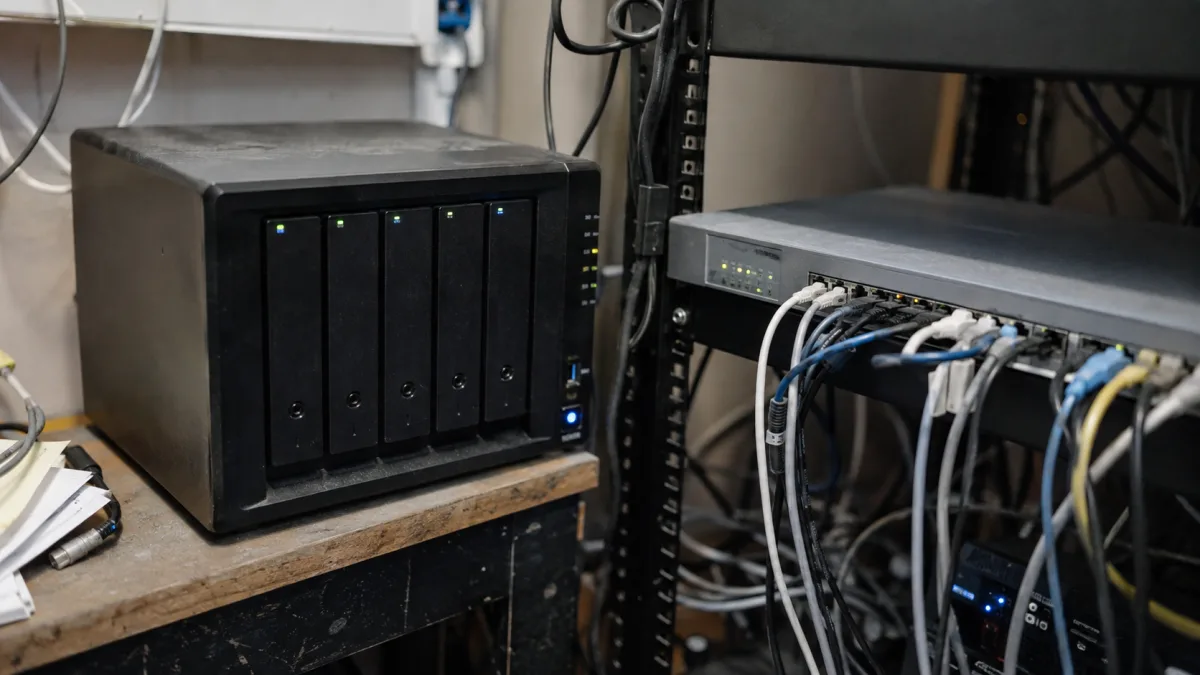
- Preserve your backups. Make sure your backup systems are disconnected and untouched, so the infection cannot reach them.
- Call for professional help. A specialist can assess whether recovery from backup is possible and how to bring systems back safely.

This is precisely the kind of situation where having technical support for businesses already in place makes the difference, because the response begins immediately instead of starting with a search for who to call.
Why paying the ransom is rarely the answer
When operations are frozen and pressure is mounting, paying the ransom can feel like the fastest way out. In practice it is the least reliable option. Payment does not guarantee that the attackers will provide a working decryption key, that the recovered data will be intact, or that they will not simply demand more. It also marks the business as one willing to pay, which invites repeat attacks.
A business with a verified, offline backup is in a completely different position. Instead of negotiating with criminals, it restores its systems from a clean copy and returns to work. This is why the preventive measures matter so much: they turn what could be an existential crisis into a recoverable interruption.
Security as a layered approach
No single measure stops every attack. Effective protection comes from layers that reinforce one another: backups that allow recovery, updates that close known vulnerabilities, authentication that resists stolen passwords, a trained team that recognizes threats, and equipment kept in good condition. When one layer is bypassed, another is there to limit the damage.
In our experience helping businesses across Montreal, the companies that come through a security incident with minimal disruption are rarely the ones with the most expensive tools. They are the ones that prepared several simple layers in advance and kept them working. Aging equipment that can no longer receive security updates is often the weakest link, which is why a timely server upgrade or migration is as much a security decision as a performance one.
Protect your business before an attack, not after
Ransomware is a serious threat, but it is not an unavoidable one. The businesses that suffer the most are usually those that had no plan; the ones that recover quickly are those that prepared before anything happened. A few well-chosen defenses, kept current and tested, dramatically reduce both the likelihood and the impact of an attack.
At Computer Repair MTL we help Montreal businesses assess their security posture, close the most common gaps, and put a realistic recovery plan in place. If you would like to know how exposed your business currently is, a security assessment is the place to start.
Frequently asked questions about ransomware
In most cases, no. Paying does not guarantee that the attackers will provide a working decryption key, that your data will be intact, or that they will not demand more. It also marks your business as willing to pay, which invites repeat attacks. A verified offline backup lets you recover without negotiating with criminals.
The most common signs are files that suddenly cannot be opened or have unfamiliar extensions, a ransom message on screen demanding payment, and systems slowing down or becoming inaccessible. If you notice these signs, disconnect the affected device from the network immediately and seek professional help.
Antivirus helps, but it is not enough on its own. Modern ransomware often evades traditional antivirus, and most infections start with a human action such as clicking a malicious link. Real protection comes from layers: backups, staff awareness, multi-factor authentication, timely updates and network segmentation working together.
It depends on how much data you can afford to lose. Many small businesses back up daily, but businesses processing transactions or critical data benefit from more frequent backups. What matters most is that at least one copy is kept offline or offsite, where ransomware cannot reach it, and that restores are tested periodically.
Yes. Attackers increasingly target small and medium businesses precisely because they hold valuable data but often have weaker defenses than large enterprises. Many attacks are automated and do not choose victims by size; they simply exploit whatever is exposed.